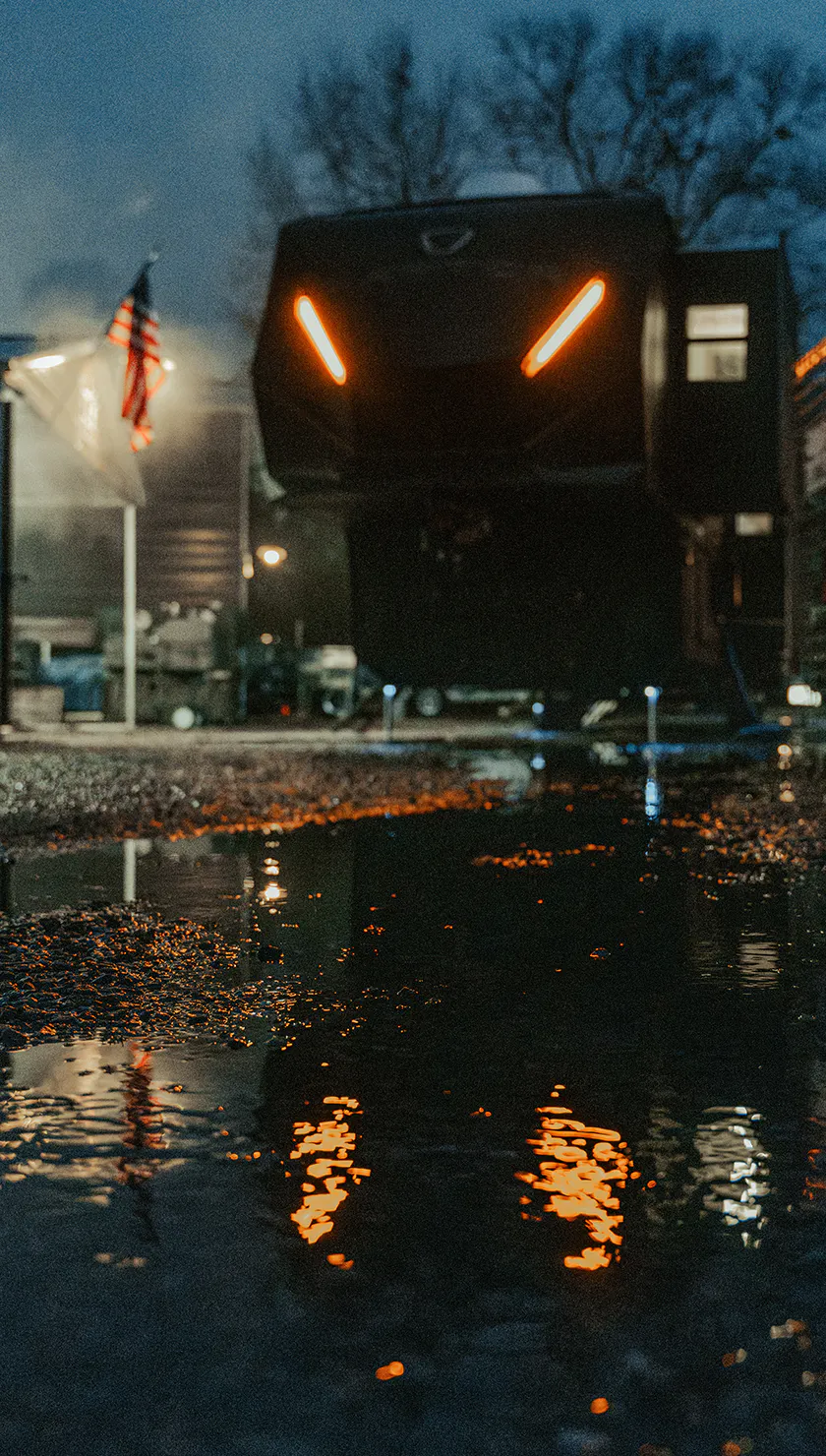
Summer camping is all about enjoying the outdoors. Morning coffee under the awning. Family dinners around the picnic table. Relaxing in the shade after a day of exploring.
Then it happens. The breeze picks up. The temperature drops. You hear a distant rumble of thunder, and suddenly that peaceful afternoon can turn into a race against the weather.
Summer storms can develop quickly, and your RV awning is often one of the first things at risk. The good news? A few simple habits and a little preparation can go a long way in protecting your Keystone RV and helping you enjoy worry-free camping all season long.
Start with a Quick Seasonal Inspection
Before your next adventure—or even before extending your awning for the first time this season—take a few minutes to give it a thorough inspection.
Look for:
- Small tears, frayed stitching, or worn fabric
- Loose mounting hardware or fasteners
- Bent or damaged support arms
- Dirt, leaves, or debris collected in the roller assembly
- Signs of corrosion or excessive wear
Catching minor issues early can prevent larger repairs later, especially when unexpected wind or heavy rain rolls through camp.
Keep an Eye on the Weather
One of the easiest ways to protect your awning is simply staying aware of changing weather conditions.
Before heading out for the day—or turning in for the evening—take a quick look at the hourly forecast and enable severe weather alerts on your phone.
Remember, storms don't always announce themselves with dark skies. Wind gusts can arrive well before the rain does.
If storms are in the forecast, it's always better to retract your awning early than wish you had later.
Know When It's Time to Retract
One of the best RV maintenance habits you can develop is knowing when to put your awning away.
As a general rule:
- Retract your awning whenever you're leaving your campsite.
- Close it before going to bed.
- Retract it immediately if winds begin to increase or storms are approaching.
- Never rely solely on tie-down straps or anchors during severe weather.
If your awning features an adjustable pitch, angle it slightly during light rain to encourage water runoff and reduce the chance of pooling. Standing water can place unnecessary stress on the fabric and support arms.
Always follow the operating and safety recommendations provided by your awning manufacturer, as features and operating guidelines may vary by model.
Create Shade—Without Taking Unnecessary Risks
Your awning is designed to make your campsite more comfortable, and with a little awareness, you can enjoy it all summer long.
A few smart habits include:
- Take advantage of cooler mornings and evenings when weather is generally calmer.
- Add outdoor rugs, shade screens, or lighting to create a comfortable outdoor living space.
- Keep an eye on nearby trees and flags. If they're moving more than you'd like, it's probably time to retract your awning.
- Double-check that your awning is fully extended and properly locked before settling in.
Sometimes the smartest camping decision is simply knowing when to pack it away.
Common Awning Mistakes to Avoid
Even experienced RV owners can make these simple mistakes:
- Leaving the awning extended while exploring the area.
- Forgetting to retract it before going to sleep.
- Allowing rainwater to pool on the fabric.
- Waiting until strong winds arrive before retracting it.
- Assuming tie-downs will protect it during severe weather.
Avoiding these common habits can help extend the life of your awning and reduce the chance of unexpected damage.
Before You Leave Your Campsite: A Quick Checklist
Before heading out for the day, take 30 seconds to run through this checklist:
✔ Check the weather forecast.
✔ Retract your awning.
✔ Confirm the awning is fully closed and secured.
✔ Store loose outdoor items if storms are expected.
✔ Enjoy your day knowing your campsite is ready for whatever the weather brings.
A Little Prevention Goes a Long Way
Your awning does more than provide shade—it helps create the outdoor living space where so many camping memories are made.
Whether you're sharing breakfast with family, relaxing after a hike, or enjoying a quiet evening around the campsite, taking a few extra moments to inspect your awning and retract it before storms arrive can help keep those moments worry-free.
After all, protecting your RV isn't about preparing for the worst—it's about making sure you're ready for the next great adventure.
Start with a Quick Seasonal Inspection
Before your next adventure—or even before extending your awning for the first time this season—take a few minutes to give it a thorough inspection.
Look for:
- Small tears, frayed stitching, or worn fabric
- Loose mounting hardware or fasteners
- Bent or damaged support arms
- Dirt, leaves, or debris collected in the roller assembly
- Signs of corrosion or excessive wear
Catching minor issues early can prevent larger repairs later, especially when unexpected wind or heavy rain rolls through camp.
Keep an Eye on the Weather
One of the easiest ways to protect your awning is simply staying aware of changing weather conditions.
Before heading out for the day—or turning in for the evening—take a quick look at the hourly forecast and enable severe weather alerts on your phone.
Remember, storms don't always announce themselves with dark skies. Wind gusts can arrive well before the rain does.
If storms are in the forecast, it's always better to retract your awning early than wish you had later.
Know When It's Time to Retract
One of the best RV maintenance habits you can develop is knowing when to put your awning away.
As a general rule:
- Retract your awning whenever you're leaving your campsite.
- Close it before going to bed.
- Retract it immediately if winds begin to increase or storms are approaching.
- Never rely solely on tie-down straps or anchors during severe weather.
If your awning features an adjustable pitch, angle it slightly during light rain to encourage water runoff and reduce the chance of pooling. Standing water can place unnecessary stress on the fabric and support arms.
Always follow the operating and safety recommendations provided by your awning manufacturer, as features and operating guidelines may vary by model.
Create Shade—Without Taking Unnecessary Risks
Your awning is designed to make your campsite more comfortable, and with a little awareness, you can enjoy it all summer long.
A few smart habits include:
- Take advantage of cooler mornings and evenings when weather is generally calmer.
- Add outdoor rugs, shade screens, or lighting to create a comfortable outdoor living space.
- Keep an eye on nearby trees and flags. If they're moving more than you'd like, it's probably time to retract your awning.
- Double-check that your awning is fully extended and properly locked before settling in.
Sometimes the smartest camping decision is simply knowing when to pack it away.
Common Awning Mistakes to Avoid
Even experienced RV owners can make these simple mistakes:
- Leaving the awning extended while exploring the area.
- Forgetting to retract it before going to sleep.
- Allowing rainwater to pool on the fabric.
- Waiting until strong winds arrive before retracting it.
- Assuming tie-downs will protect it during severe weather.
Avoiding these common habits can help extend the life of your awning and reduce the chance of unexpected damage.
Before You Leave Your Campsite: A Quick Checklist
Before heading out for the day, take 30 seconds to run through this checklist:
✔ Check the weather forecast.
✔ Retract your awning.
✔ Confirm the awning is fully closed and secured.
✔ Store loose outdoor items if storms are expected.
✔ Enjoy your day knowing your campsite is ready for whatever the weather brings.
A Little Prevention Goes a Long Way
Your awning does more than provide shade—it helps create the outdoor living space where so many camping memories are made.
Whether you're sharing breakfast with family, relaxing after a hike, or enjoying a quiet evening around the campsite, taking a few extra moments to inspect your awning and retract it before storms arrive can help keep those moments worry-free.
After all, protecting your RV isn't about preparing for the worst—it's about making sure you're ready for the next great adventure.
Keep Your Keystone Adventure Ready
Looking for more seasonal maintenance tips, travel inspiration, and owner resources? Visit the Keystone RV Owner Support for expert advice to help you get the most out of every camping season.