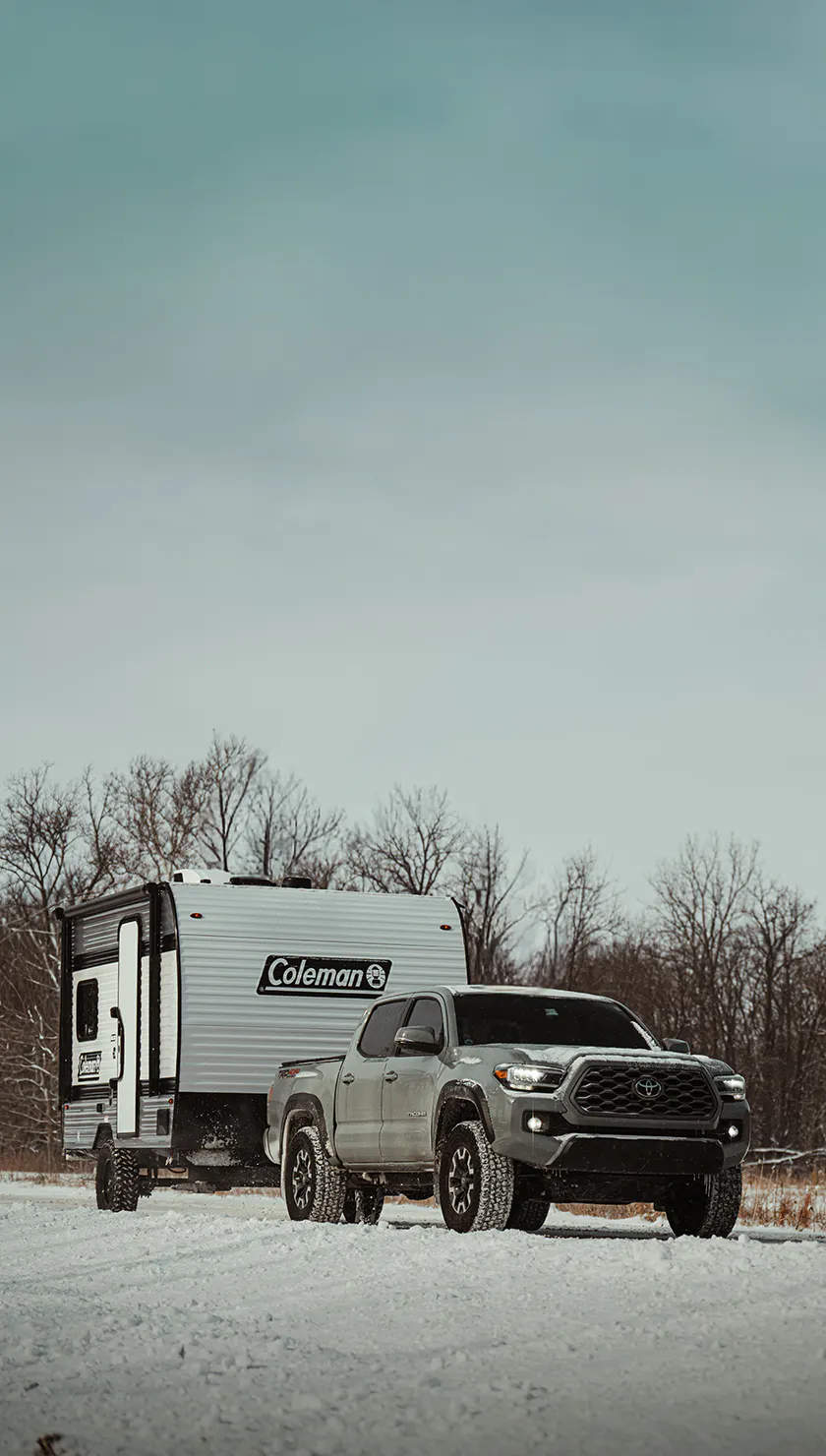
Heated underbellies, tank heat pads, insulation and furnace heat can help support cold-weather camping and protect parts of your RV’s plumbing. Equipment varies by model and floorplan, and no package makes an RV freeze-proof. Check your owner’s manual and confirm which features are installed on your RV before traveling in freezing temperatures.
What RV features can help with cold-weather camping?
Cold-weather features may help retain heat or protect plumbing and tanks. Depending on the RV, they can include:
- A heated, enclosed underbelly
- Holding-tank heat pads
- Insulation in areas such as the underbelly, slide floors or front cap
- Furnace ducting that directs heat into protected areas
- PEX plumbing and other features designed for the RV’s water-system layout
Cold-weather features on select Keystone RVs
- Cougar: The Climate Guard Protection Package includes features such as an 18K Furrion Chill Cube A/C with heat pump, 30K BTU furnace, 12V tank heat pads, and a heated, enclosed underbelly. Equipment varies by model and floorplan. Explore Cougar models and available features.
- Walkabout: Cold-weather features include a heated, enclosed underbelly with thermostatically controlled tank heaters, a high-output furnace and a heat pump. Explore Walkabout models and features.
- Eddie Bauer: Features include 12V heated tank pads, an insulated underbelly with furnace heat ducted into it, and an electric fireplace with heater. Slide-out awning toppers help keep snow and ice off slide roofs, and weather-guard exterior wire connectors are designed to keep connections watertight. Explore Eddie Bauer models and features.
Equipment varies by model and floorplan. Check your build sheet and owner’s manual to confirm what your RV has. For questions, call Owner Relations (866) 425-4369 or email our team.
How should I prepare my RV for a cold-weather trip?
Before departure, review the heating and plumbing instructions for your RV. Then:
- Test the furnace and keep its vents clear.
- Monitor propane levels if your furnace uses propane.
- Confirm the power supply needed for tank heat pads and other systems.
- Keep interior doors open to help warm air circulate.
- Ventilate as directed and watch for condensation.
Cold temperatures can still put plumbing at risk, even with a heated, enclosed underbelly. Our winter camping tips cover heating, airflow, propane, power planning and moisture control.
Is cold-weather camping the same as winter storage?
No. Cold-weather camping means operating your RV and its heating and plumbing systems. Winter storage means protecting it while it is not in use. Cold-weather features do not replace winterization when an RV will be stored in freezing temperatures.
Follow the winterization procedure for your model and water-heater type. If your RV has a tankless water heater, use its operator’s manual for winterization instructions. See our RV winterization guide for more information.
Review your owner’s manual before traveling in freezing weather.