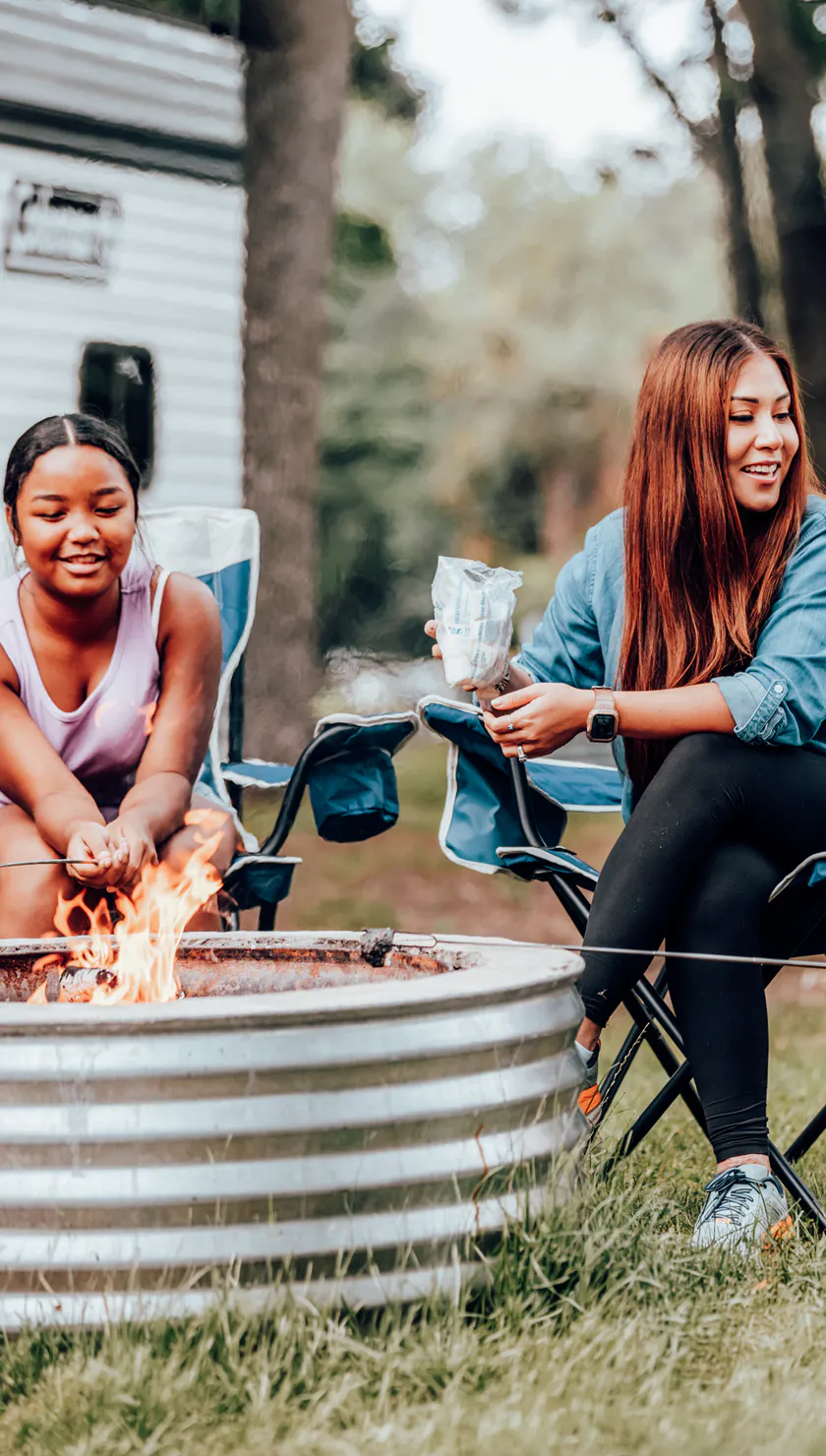
There's something timeless about ending the day around a campfire.
The crackle of the wood, stories shared with family and friends, marshmallows roasting over the flames, and the quiet that settles in as the stars come out—it's one of the experiences that makes camping so memorable.
But with that tradition comes responsibility.
Every campfire has the potential to impact more than your campsite. A single ember carried by the wind can damage property, threaten wildlife, or spark a wildfire that affects entire communities. Fortunately, a few simple precautions can help you enjoy the campfire experience while protecting your family, your Keystone RV, and the beautiful places we all love to explore.
Check for Fire Restrictions Before You Arrive
Before packing the firewood or planning s'mores, take a few minutes to check for local fire restrictions. Fire conditions can change quickly, especially during the warmer months, and even campgrounds that typically allow campfires may temporarily prohibit wood-burning fires, charcoal grills, or other open flames.
Fire restrictions are often put in place because of:
- Dry weather
- Drought conditions
- High winds
- Elevated wildfire risk
- Local emergency declarations
Before heading out, check current wildfire conditions, fire restrictions, and weather alerts along your route and at your destination. Visit your campground's website or the appropriate state park or local land management agency for the latest updates, and always follow posted campground rules once you arrive.
A few minutes of preparation can help you avoid unexpected closures or restrictions, protect natural resources, and keep your camping experience safe, enjoyable, and worry-free. When fire restrictions are in place, respecting them helps protect the places we all enjoy for future adventures.
Build Smart. Burn Smart.
If campfires are permitted, use only designated fire rings or fire pits provided by the campground.
To keep your fire safe:
- Keep fires small and manageable.
- Burn only clean, untreated firewood.
- Never burn trash, plastics, cans, or treated lumber.
- Keep the fire contained within the fire ring.
- Avoid adding excessive wood that creates large flames or flying embers.
A smaller fire is easier to enjoy, easier to control, and much easier to extinguish when the evening comes to an end.
Protect Your RV and Campsite
Your campfire should provide warmth—not become a hazard.
Position your fire well away from your Keystone RV, vehicles, tents, trees, and dry vegetation. Sparks and radiant heat can travel farther than many campers realize, especially when afternoon breezes begin to pick up.
A few simple precautions include:
- Store propane cylinders and fuel containers away from open flames.
- Keep outdoor furniture outside the spark zone.
- Retract your awning if winds increase or embers begin drifting.
- Never park portable grills or fire pits directly beneath your awning.
Creating a little extra distance today can prevent costly damage tomorrow.
Keep Fire Safety Equipment Within Reach
Every campfire should have an exit plan.
Before lighting your fire, make sure you have:
- A bucket of water
- A shovel
- A hose, if available
- A fully charged fire extinguisher
Never leave a campfire unattended—not even for a few minutes.
If everyone is leaving the campsite, the fire should be completely extinguished first.
Put It Out Completely
One of the most important camping habits is making sure your fire is truly out before leaving or going to bed.
To extinguish your fire:
- Pour water over the entire fire, including the embers.
- Stir the ashes with a shovel.
- Add more water.
- Repeat until everything is cool to the touch.
If it's too hot to touch, it's too hot to leave.
Don't rely on dirt or sand alone—they can trap heat and allow embers to continue smoldering long after everyone has gone to sleep.
Leave the Campsite Better Than You Found It
Responsible camping goes beyond cleaning up your gear.
Dispose of cooled ashes only where permitted, leave fire rings clean, and never collect firewood from areas where it's prohibited. Purchasing local firewood also helps prevent the spread of invasive insects and tree diseases that can travel across state lines.
Small actions like these help preserve campgrounds for future generations of campers.
Camp Responsibly. Protect What We Love.
Campfires create some of camping's best memories—but only when they're enjoyed safely.
By checking local fire restrictions, keeping fires contained, protecting your RV, and fully extinguishing every fire, you're doing more than protecting your own campsite. You're helping preserve forests, campgrounds, and the outdoor spaces that make the RV lifestyle so special.
Whether you're gathered around the fire with family, sharing stories with neighbors, or simply enjoying a quiet evening under the stars, practicing good campfire safety ensures those moments can continue for years to come.
Keep the Adventure Burning—Safely
Looking for more seasonal camping tips, RV maintenance advice, and owner resources? Explore the Keystone RV Owners Support and discover helpful articles designed to make every adventure safer, easier, and more enjoyable.